


ERASMUS + PROJECT Strengthening Workplace Safety through Applied Ergonomics in the
Digital Age "SAFE-D"
01.04.2024 - 31.03.2026

Strengthening Workplace Safety through Applied Ergonomics in the Digital Age
KA210-ADU-F26A6A52
PARTNERS:
DSGI Ergonómiai Mérnökiroda kft. (E10318915 - HU)
Bulgarian Association of Ergonomics and Human Factors (E10274857 - BG)
https://baehfofficial.wixsite.com/baehf
CAPPADOCIA INNOVATION INSTITUTE TEKNOLOJİ LİMİTED ŞİRKETİ (E10319313 - TR)
STRENGTHENING WORKPLACE SAFETY THROUGH APPLIED ERGONOMICS IN THE DIGITAL AGE – THE SAFE-D project
If you want to enhance workplace safety by applying ergonomics in the digital age, you are in the right place. By implementing the SAFE-D ERASMUS+ project, we aim to make workplaces safer and healthier. In developing this project, we have set specific goals that truly impact people, improving the health, work efficiency, and satisfaction of employees in small and micro-enterprises.
Objectives and Activities of the SAFE-D Project
Needs Assessment and Curriculum Development: We aim to understand the needs of individuals regarding workplace safety so that we can develop an ergonomics curriculum accordingly.
Workshops and Mentorship Programs: Our goal is to enable people to experience ergonomic principles in practice and assist them in creating a safe work environment.
Project Management and Dissemination: We strive to work efficiently and share our results with interested parties, making safe working conditions accessible to as many people as possible.
Target Audience
We focus on people, everyday work activities, and workplace environments. We assist those who consider ergonomics and safety essential in their work.
Why is the SAFE-D Project Important?
Because everyone wants to work healthily and safely, our work helps turn this desire into reality.
Join Us!
If you consider safe working conditions and a healthy workplace environment important, join us in the SAFE-D Project! Be one who can participate in customized training for free, or help us by sharing your opinions to understand the situation better!
We maintain contact through social media platforms; please sign up and join us.
Funded by the European Union. Views and opinions expressed are however those of the author(s) only and do not necessarily reflect those of the European Union or the European Education and Culture Executive Agency (EACEA). Neither the European Union nor EACEA can be held responsible for them.
A Munkahelyi Biztonság Erősítése a Digitális Korszak Ergonómiai Alkalmazásával
Ha Önt is érdekli a Munkahelyi Biztonság Erősítése a Digitális Korszak Ergonómiai Alkalmazásával, akkor a legjobb helyen jár. A SAFE-D ERASMUS+ pályázat megvalósításával arra törekszünk, hogy a munkahelyeket még biztonságosabbá és egészségesebbé tegyük. A pályázat kidolgozásakor olyan konkrét célokat tűztünk ki, amelyek valóban érintik az embereket, és tényleg javítját a kis- és mikrovállalkozásoknál dolgozók egészségét, munkahatékonyságát és elégedettségét.
A SAFE-D projekt céljai és tevékenységei
Igényfelmérés és tananyagfejlesztés: Meg akarjuk érteni, mire van szükségük az embereknek a munkahelyi biztonság terén, hogy ennek megfelelően alakíthassunk ki egy ergonómiai tananyagot.
Műhelymunkák és mentori programok: Célunk, hogy a gyakorlatban is megtapasztalhassák az emberek az ergonómiai elveket, és segítsük őket a biztonságos munkakörnyezet kialakításában.
Projektmenedzsment és terjesztés: Hatékonyan akarunk dolgozni és eredményeinket el szeretnénk juttatni az érdeklődőkhöz, hogy minél több ember számára tegyük elérhetővé a biztonságos munkavégzés lehetőségét.
Célcsoportunk
Mi az emberekre, a mindennapi munkavégzésre és a munkahelyi környezetre összpontosítunk. Azoknak segítünk, akik munkájuk során fontosnak tartják az ergonómiát és a biztonságot.
Miért fontos a SAFE-D projekt?
Mert mindenki szeretne egészségesen és biztonságosan dolgozni. Munkánk segít abban, hogy ez a vágyból valósággá váljon.
Együttműködés Transznacionális Partnerekkel
A HU01-KA210-ADU-000171333 ERASMUS+ kisléptékű partnerségi projektet a DSGI Ergonómiai Mérnökiroda Kft. vezetésével, a török CAPPADOCIA Innovációs Intézet Technológia Korlátolt Felelősségű Társaság és a Bolgár Ergonómia Társaság közreműködésével valósítjuk meg. Önre is számítunk ebben a küldetésben, mert együttműködéseink erősebbé és hatékonyabbá tesznek bennünket a közös céljaink elérésében.
Csatlakozzon!
Ha Ön is fontosnak tartja a biztonságos munkavégzést és az egészséges munkahelyi környezetet, csatlakozzon hozzánk a SAFE-D Projektben! Legyen Ön az egyik, aki ingyenesen vehet részt a testreszabott tréningen, vagy véleményének megosztásával segítsen bennünket a helyzet jobb megismerésében!
A projetben a kapcsolatot a szociális médiában kialakított felületen tartjuk, kérjük vegye jelentkezzen be.
Az Európai Unió finanszírozásával. Az itt szereplő vélemények és állítások a szerző(k) álláspontját tükrözik, és nem feltétlenül egyeznek meg az Európai Unió vagy az Európai Oktatási és Kulturális Végrehajtó Ügynökség (EACEA) hivatalos álláspontjával. Sem az Európai Unió, sem az EACEA nem vonható felelősségre miattuk.


Triple E Awards 2025
Award Ceremony: Prague, Czech Republic
https://2025.triple-e-awards.com/
Finalists - Global Awards
https://2025.triple-e-awards.com/finalists/region/2025global
The SAFE-D project represents a pioneering initiative designed to empower small and medium enterprises (SMEs) with practical ergonomics solutions tailored for today's digital workplaces. Recognizing that SMEs often lack dedicated occupational health resources, this project delivers accessible, cost-effective tools to improve employee well-being, productivity, and workplace safety.
https://baehfofficial.wixsite.com/baehf/erasmus-project-safe-d
Why SAFE-D Matters for SMEs
In an era where digital transformation is reshaping work environments, SMEs face unique challenges:
- Increased risk of musculoskeletal disorders from prolonged computer use and poor workstation setups
- Limited budgets for expensive ergonomic equipment or specialist consultations
- Lack of awareness about simple, effective adjustments that can prevent injuries
SAFE-D addresses these challenges head-on through:
-
Key Innovations:
- SME-Tailored Training – Customized workshops and materials designed for smaller workspaces and budgets
- Digital Ergonomics Solutions – Practical strategies for hybrid work, screen fatigue, and mobile device usage
- Hands-On Implementation – On-site mentoring to help businesses apply changes immediately
-
Tangible Benefits for SMEs:
- Reduced workplace injuries and associated costs
- Improved employee productivity and job satisfaction
- Sustainable practices that continue beyond the project timeline
- Competitive advantage through better workplace health standards
Project Approach:
- Needs Assessment – Identifying specific pain points in partner countries
- Practical Curriculum – Developing easy-to-implement guidelines
- Direct Support – Workshops and mentoring for real-world application
- Ongoing Resources – Creating a lasting knowledge base for SMEs
By focusing on real-world applicability, SAFE-D ensures even resource-limited SMEs can achieve meaningful improvements. The project's cross-border collaboration combines best practices from Hungary, Bulgaria, and Turkey to create solutions that work across different cultural and business contexts.
For SMEs navigating the challenges of digital transformation, SAFE-D offers a roadmap to safer, healthier, and more productive workplaces.
https://2025.triple-e-awards.com/finalist/id/1184


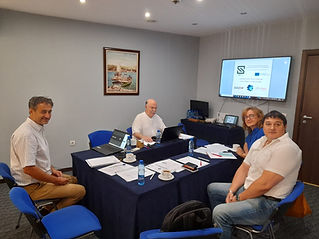
TPM Project SAFE-D Turkey, July, 2024
Place: İTÜ | İstanbul Teknik Üniversitesi


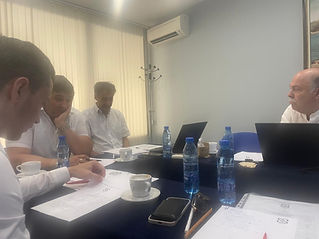
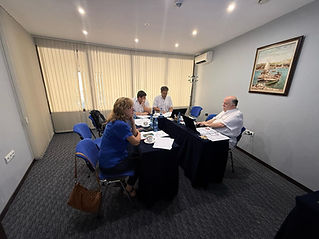
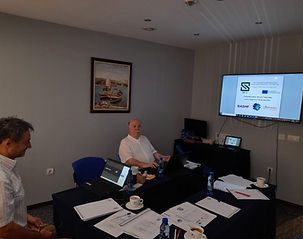
TPM Project SAFE-D Bulgaria, July, 2025
Place: Rosslyn Dimyat Hotel Varna
https://dimyat.rosslyn-hotels.com/
Varna, Knyaz Boris I Blvd., 111
Pearl Hall 2




European Society of Criminology
The European Society of Criminology was founded in 2000. The Society aims to bring together in Europe persons actively engaged in research, teaching and/or practice in the field of Criminology.
The Society wishes to foster criminological scholarship, research, education and training, and to encourage scholarly, scientific and practical exchange and cooperation among criminologists in Europe and elsewhere. Its objective is further to serve as a forum for the dissemination of criminological knowledge at the European level.
Address: University of Lausanne
ESC – Sorge – BCH
CH-1015 Lausanne
Switzerland

EUROCRIM 2025 – The 25th Annual Conference of the ESC, Athens, Greece, from 3 to 6 September 2025
The Annual Conference of the European Society of Criminology (ESC) is one of Europe's most significant gatherings of criminologists and professionals in related fields. It provides a platform for researchers, practitioners, and policymakers from all over the world to discuss and share their work on various aspects of criminology, criminal justice, and related social sciences.


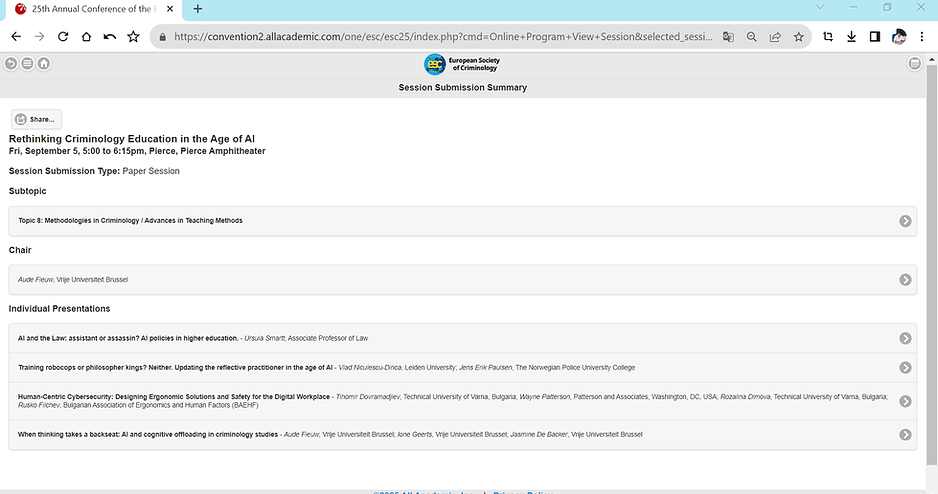

European Society of Criminology
EUROCRIM 2025
25th Annual Conference of the European Society of Criminology 2025
https://convention2.allacademic.com/one/esc/esc25/
Program
Topic 8: Methodologies in Criminology / Advances in Teaching Methods
In Event: Rethinking Criminology Education in the Age of AI
Topic
Human-Centric Cybersecurity: Designing Ergonomic Solutions and Safety for the Digital Workplace
Abstract
The integration of human-centric cybersecurity and ergonomic design to enhance safety and productivity in the digital workplace showcases expert insights from the book New Perspectives in Behavioral Cybersecurity II: Human Behavior for Business, Profiling, Linguistics, and Voting (Taylor & Francis CRC Press, ISBN 9781032983523, 2025). The title "Human-Centric Cybersecurity" has evolved from previous fields of research that originated from terms such as "cryptology," "cybersecurity," and similar concepts. A major shift in focus emerged with the understanding that securing information in a computing environment would be better addressed not only through mathematical and engineering approaches but also by incorporating human behavior and psychological perspectives. The first extensive writing on this topic was found in the book Behavioral Cybersecurity (Wayne Patterson and Cynthia Winston-Proctor, CRC Press, 2019). The current book follows this approach, reflecting the unified perspectives described above, and incorporates scientific and empirical experience that aligns with the development of scientific projects, scientific-applicable initiatives, and research. Closely related to this are the objectives of the SAFE-D project (Strengthening Workplace Safety through Applied Ergonomics in the Digital Age, DSGI, BAEHF, CAPPINNO, KA210-ADU-F26A6A52), where safety in the digital age is the priority, covering aspects that include human-machine-environment interactions. The experience gained from these activities contributes to an enhanced global vision of security and safety for the public and private sectors. This multidisciplinary approach aligns with the safety mission to make optimal working conditions accessible to all while addressing the evolving challenges of safety in modern work environments. This experience is crucial for society and stakeholders, as it enhances workplace safety, cybersecurity resilience, and human well-being by reducing errors, protecting data, preventing financial losses, and fostering a culture of security and ergonomic awareness. By leveraging transnational experience, intercontinental insights, and state-of-the-art technologies, it benefits citizens, businesses, and employees globally.
Authors
Tihomir Dovramadjiev, Technical University of Varna, Bulgaria
Wayne Patterson, Patterson and Associates, Washington, DC, USA
Rozalina Dimova, Technical University of Varna, Bulgaria
Rusko Filchev, Bulgarian Association of Ergonomics and Human Factors (BAEHF)
SAFE-D Project Thank You to All Partners and Participants
május 30, 2026 DSGI_admin Hírek,Kiemelt bejegyzések
The SAFE-D – Strengthening Workplace Safety through Applied Ergonomics in the Digital Age Erasmus+ project is approaching its official closure, and we are pleased to share the main results of this intensive and highly practice-oriented cooperation.
Over the project period, partners from Hungary, Türkiye and Bulgaria worked together to support the practical use of ergonomics in small and medium-sized enterprises. The project combined needs analysis, workplace observation, training, mentoring, pilot implementation, dissemination and the development of reusable learning materials.
Some key figures from the project:
-
3 partner countries involved: Hungary, Türkiye and Bulgaria;
-
24 company visits carried out during the needs analysis phase;
-
111 questionnaire responses collected from relevant target groups;
-
11 organisational pilot settings involved in the training and implementation phase;
-
45 direct participants reached through pilot activities;
-
several professional outputs developed, including the Need Analysis Report, Curriculum and Intervention Guidebook, Toolbox, Workbook, Trainer’s Manual and Company Visit Guide.
The strength of SAFE-D was its practical approach. The project did not treat ergonomics as a purely theoretical or regulatory issue. Instead, it focused on real workplaces, real constraints and realistic improvement opportunities. The materials developed in the project help companies, trainers and professionals identify ergonomic problems, reflect on workplace conditions and plan small but meaningful improvements.
We are especially proud that the results are already being used beyond the formal project activities. SAFE-D materials have been introduced into training and education, discussed in professional networks, presented at scientific and professional events, and further developed towards e-learning formats.
We would like to express our sincere thanks to all project partners, participating companies, trainers, learners, experts and professional contributors who supported the implementation of SAFE-D.
Special thanks go to Prof. Dr. Mustafa Hilmi Çolakoğlu and the team of Cappadocia Innovation Institute Teknoloji Limited Şirketi / CAPPINNO, Türkiye, whose contribution was essential in adult education, innovation, dissemination, sustainability planning and the further e-learning adaptation of the project materials.
We are also grateful to Prof. Dr. Tihomir Dovramadjiev and the Bulgarian Association of Ergonomics and Human Factors, Bulgaria, for their professional contribution in ergonomics, human factors, quality assurance, pilot implementation and international dissemination.
As the Hungarian project coordinator, DSGI Ergonómiai Mérnökiroda Kft. was honoured to support the partnership by coordinating the project, contributing ergonomics and occupational safety expertise, preparing project outputs and helping connect the results to training, workplace development and professional networks. The partnership structure and the official participating organisations are consistent with the submitted Erasmus+ application.
We also gratefully acknowledge the support of the European Union and the Tempus Public Foundation, which made this cooperation possible.
The main project outputs are now available and can be used for further training, workplace development and professional learning.
If you are interested in organising a SAFE-D-based training, workshop or workplace ergonomics development programme in your region, please contact us. We would be happy to discuss how the SAFE-D approach can be adapted to your organisation, sector or professional community.
SAFE-D has shown that applied ergonomics can be understandable, practical and useful for SMEs. With the right tools and support, safer, healthier and more human-centred workplaces are within reach.
Funded by the European Union. Views and opinions expressed are however those of the author(s) only and do not necessarily reflect those of the European Union or the Tempus Public Foundation. Neither the European Union nor the granting authority can be held responsible for them.


SAFE-D Project Outputs Available for Download
https://www.dsgi.hu/main/2026/05/30/safe-d-project-outputs-available-for-download/
május 30, 2026 DSGI_admin Hírek,Kiemelt bejegyzések
The main professional outputs of the SAFE-D project are now available. These materials support the practical application of ergonomics in small and medium-sized enterprises through needs analysis, workplace observation, training, mentoring and intervention planning.
SAFE-D Need Analysis Report
The SAFE-D Need Analysis Report presents the empirical and contextual basis of the project. It summarises findings from Hungary, Türkiye and Bulgaria on how SMEs deal with workplace safety, occupational health and applied ergonomics. The report identifies common ergonomic risks, training gaps and organisational barriers, and it provides the foundation for the SAFE-D curriculum, toolbox and intervention model.
R1 SAFE-D A.1_Need Analysis Report_V6Letöltés
SAFE-D Curriculum and Intervention Guidebook
The SAFE-D Curriculum and Intervention Guidebook translates the needs analysis findings into a practical training and intervention framework. It supports trainers, consultants and organisations in identifying workplace ergonomic problems, setting realistic goals, developing feasible solutions and reflecting on results. The guidebook is designed for adult education, vocational training, workplace consultancy and SME development activities.
R2 SAFE-D A.1_Guide book V6Letöltés
SAFE-D Tool Box
The SAFE-D Tool Box provides practical resources for applying ergonomics in SMEs. It supports workplace observation, ergonomic problem identification, risk awareness, employee involvement and small-scale improvement planning. The tools are simple, understandable and adaptable, making them suitable for trainers, managers, employees and consultants.
R2 SAFE-D A.2_ToolBox V6Letöltés
SAFE-D Trainers Manual
The SAFE-D Trainers Manual supports trainers and facilitators in implementing the SAFE-D workplace-based ergonomics intervention process. It explains the trainer’s role as a mentor, facilitator and reflective partner, not only as a lecturer. The manual provides guidance for opening sessions, participant engagement, workplace analysis, solution development, implementation planning and learning consolidation.
R2 SAFE-D A.2_Trainers manual V6Letöltés
SAFE-D Company Visit Guide
The SAFE-D Company Visit Guide helps organisations and trainers carry out a structured first assessment of workplace ergonomics. It supports the identification of health-related complaints, physical and biomechanical factors, work organisation issues, cognitive and psychosocial factors, and organisational constraints. The guide helps users define preliminary ergonomic goals and decide on possible next steps, such as further analysis, training or expert involvement.
SAFE_D-Company-Visit-GuideLetöltés
Ergonomic Needs Assessment Template for SMEs
This template helps SMEs reflect on possible ergonomic problems, their severity and the type of intervention that may be needed. It supports structured thinking about health, performance, work organisation, physical workload and organisational constraints. The document does not provide ready-made solutions; instead, it helps companies make informed decisions about further action.
https://www.dsgi.hu/main/wp-content/uploads/2026/05/SAFE_D-igenyfelmero-hu.pdf