


ERASMUS + PROJECT
ErgoAI: Enhancing Adult Education in Ergonomics through AI at BAEHF
01.06.2025 - 30.11.2026
2025-1-BG01-KA122-ADU-000322917


PARTNERS:
Bulgarian Association of Ergonomics and Human Factors - Bulgaria
https://baehfofficial.wixsite.com/baehf
IA GO! - Spain
https://drive.google.com/file/d/1vAOA__IwnWGPhXG7zUKShXl20OiQSDOw/view
Objectives:
- Enhance lifelong learning opportunities and knowledge transfer by equipping adult educators and professionals with AI-powered ergonomic tools and digital methodologies for workplace well-being.
- Develop skills in AI-driven ergonomic analysis to create personalized online training programs.
- Foster international collaboration and best practice exchange between Bulgaria and Spain, strengthening adult education
throug mobility, digital transformation, and awareness of ergonomic risks.
IA GO!IA GO!
Cierre del curso Erasmus+ KA122 “AI and Digital Transformation in Adult Learning”
https://www.linkedin.com/posts/ia-go_cierre-del-curso-erasmus-ka122-ai-activity-7388157276303458304-8AnU?utm_source=share&utm_medium=member_desktop&rcm=ACoAAB6r-VwBFpryFO76RoxBoFrkBoEXexreijo
https://www.instagram.com/reel/DQRTjm6Davq/?utm_source=ig_web_copy_link&igsh=MzRlODBiNWFlZA==
Del 13 al 17 de octubre, hemos tenido el placer de acoger en Mazagón (España) al grupo de participantes de BAEHF (Bulgaria) dentro de su movilidad del programa Erasmus+ KA122 – Educación de Personas Adultas.
Durante esta semana formativa, las participantes exploraron cómo aplicar la Inteligencia Artificial y la Transformación Digital al aprendizaje de adultos, mejorando la comunicación organizacional, la eficiencia de los procesos y la creatividad en sus equipos.
Trabajaron con herramientas como ChatGPT, Make.com, NotebookLM y Lovable, combinando teoría y práctica en escenarios reales que podrán replicar en sus propias organizaciones.
Cerramos la semana con la entrega de certificados y muchas ideas inspiradoras para seguir impulsando la innovación educativa en Europa.
Mazagón, España
Organizado por IA→GO!
Erasmus+ KA122 Course “AI and Digital Transformation in Adult Learning”
From 13th to 17th October, we had the pleasure of welcoming the team from BAEHF (Bulgaria) in Mazagón, Spain, as part of their Erasmus+ KA122 – Adult Education mobility.
Throughout the week, participants explored how to apply Artificial Intelligence and Digital Transformation to adult learning, enhancing organizational communication, efficiency, and creativity.
They worked hands-on with tools such as ChatGPT, Make.com, Power BI and Lovable, combining theory and practice through real-world applications they can now bring back to their institutions.
We concluded the week with certificate delivery and plenty of inspiration to keep driving digital innovation in education across Europe.
Mazagón, Spain
Organised by IA→GO!
-
Course 1 video 1: https://www.youtube.com/shorts/Jayc0-mZN6Q
-
Course 1 video 2: https://youtube.com/shorts/mT01SjHLvvc
-
Course 1 video 3: https://youtube.com/shorts/poNd8TQN6L0
-
Course 1 video 4: https://youtube.com/shorts/TV8EJi4AYT4
Курс по програма Erasmus+ KA122 „Изкуствен интелект и дигитална трансформация в образованието за възрастни“
От 13 до 17 октомври IA GO (Испания) посрещна екипа на БАЕЧФ (България) в Масагон, Испания, като част от тяхната мобилност по програма Erasmus+ KA122 – Образование за възрастни. През цялата седмица участниците изследваха как да приложат изкуствения интелект и дигиталната трансформация в обучението на възрастни, подобрявайки организационната комуникация, ефективност и креативност. Те работиха практически с инструменти като ChatGPT, Make.com, Power BI и Lovable, комбинирайки теория и практика чрез реални приложения. Седмицата завърши с връчване на сертификати и пожелание за вдъхновение за продължаване стимулирането на дигиталните иновации в образованието в цяла Европа.
Масагон, Испания
Организирано от IA→GO!


10th International Language Week incl. Intercultural Communication, Aschaffenburg University of Applied Sciences - UAS, Germany, December 1-5, 2025,
https://www.th-ab.de/en/
10-та Международна езикова седмица включително междукултурна комуникация, Университет по приложни науки Ашафенбург - УПН, https://www.th-ab.de/en/ Германия, 1-5 декември 2025 г.
https://www.th-ab.de/en/news/10th-international-language-week (EN)
https://www.th-ab.de/hochschule/aktuelles/presse/artikel/10-international-language-week (DE)
Professor (Assoc) Dr Eng Tihomir Dovramadjiev (Тихомир Доврамаджиев) and colleagues
Published
2025-12-10
Official program
Abstract Booklet
Dovramadjiev, Tihomir Technical University of Varna (TUV), Bulgaria dr.tihomir.dovramadjiev@gmail.com Tihomir Dovramadjiev is a professor associated at the Technical University of Varna (TUV), Bulgaria. He is the President of the Bulgarian Association of Ergonomics and Human Factors (BAEHF), affiliated with the International Ergonomics Association (IEA) and the Federation of European Ergonomics Societies (FEES). He has PhD in Ergonomics and Industrial Design. He has contributed to around 100 scientific publications-articles and books. In the academic field, he is a lead lecturer in disciplines such as "Advanced Technologies in Design" and "EcoDesign," and he mentors PhD, bachelor's and master's students. He participates in a number of editorial boards and scientific conference committees. Increasing Educational and Language Opportunities Through the Implementation of International Experience from Project and Scientific Activities Effective international collaboration requires a solid educational, scientific, and pedagogical foundation, particularly within the framework of European-led programs like Erasmus+ and Horizon Europe that target Higher Education and Vocational Education and Training (VET). It is highly recommended to form international consortia with proven specialists and experts on current European priorities. The projects developed by these consortia should be presented in an illustrative manner, create as many open-access resources as possible, and be translated into multiple languages. This approach significantly enhances comprehension for trainees, students, and all stakeholders. This summary aims to present a successfully realized experience through internationally recognized projects. For instance, all results from the transnational projects HEDY and ErgoDesign have been translated into a wide array of languages. HEDY, a notable AI & Society European project spanning five countries across Eastern, Western, and Central Europe, has translated its outputs into seven languages: German, English, Hungarian, Bulgarian, Spanish, Portuguese, and Catalan. Similarly, the healthcare-focused transnational project ErgoDesign, "Improving digital skills for ergonomics and bioengineering innovations for inclusive health care," is available in English, Greek, Hungarian, Italian, Polish, Slovak, and Bulgarian. This transnational project experience (exemplified by HEDY, ErgoDesign, SAFE-D, and ErgoAI) acts as a bridge between international societies, delivering new knowledge and scientific expertise. This methodology is vital for improving public understanding of critical societal topics and for disseminating stateof-the-art innovations in AI, Cybersecurity, Healthcare, and Workplace Safety within the context of Society 5.0 and Industry 4.0 & 5.0. When supported by other public initiatives like Summer Schools, Workshops, and Webinars, and complemented by work on international scientific articles and books, this model adds a more solid foundation to the provided experience. The implementation of numerous languages within this framework increases stakeholder preparedness and pushes educational content forward, ensuring broader impact and accessibility. International projects, education, science, society 5.0, language
10th ILW in the university's 30th anniversary year
The International Language Week (ILW) is organised by the Language Centre and the Institute for Intercultural Communication at Aschaffenburg University of Applied Sciences. In addition to Aschaffenburg (Germany, 3x), previous ILW locations have included Taipei (Taiwan), Billings (Montana, USA), Seinäjoki (Finland), Athens (Greece), Porto (Portugal) and Turku (Finland).
The International Language Week (ILW) is organised by the Language Centre and the Institute for Intercultural Communication at Aschaffenburg University of Applied Sciences. In addition to Aschaffenburg (Germany, 3x), previous ILW locations have included Taipei (Taiwan), Billings (Montana, USA), Seinäjoki (Finland), Athens (Greece), Porto (Portugal) and Turku (Finland).
10-та Международна езикова седмица (ILW) в годината на 30-годишнината на университета
Международната езикова седмица (ILW) се организира от Езиковия център и Института за междукултурна комуникация към Университета по приложни науки Ашафенбург. Освен Ашафенбург (Германия, 3 пъти), предишни места на ILW са били Тайпе (Тайван), Билингс (Монтана, САЩ), Сейняйоки (Финландия), Атина (Гърция), Порто (Португалия) и Турку (Финландия).
Contents of the ILW
The week includes joint lectures, workshops and presentations and is aimed at lecturers and young academics whose subject areas and expertise can be integrated interdisciplinarily in the following areas, among others:
-
Global Citizenship and Language Learning: Integrating global citizenship education in foreign language curricula to promote critical thinking, empathy, and global awareness.
-
Sustainability and Language Education: Developing pedagogical approaches that link language learning to sustainability issues and environmental awareness.
-
Intercultural Competence for Sustainable Communities: Fostering intercultural understanding as a foundation for collaborative solutions to global challenges.
-
Curriculum Innovation: Designing language and culture programmes that emphasize ethical and sustainable global engagement, thus stipulating lifelong-learning.
-
Digital Technologies and Global Connectivity: Leveraging digital tools to support global communication, intercultural dialogue, and education for sustainability.
-
Ethical and Social Dimensions of Language Education: Addressing social justice, equity, and ethical considerations in fostering global citizenship.
-
Teacher Education and Professional Development: Preparing educators to address global citizenship and sustainability in language teaching but also in English as a Medium of Instruction (EMI) as well as Content and Language Integrated Learning (CLIL).
-
Assessment for Global Competence and Sustainability: Evaluating learners' progress in intercultural communication, sustainability awareness, and global citizenship skills.
-
Case Studies: Innovative practices and success stories in embedding global citizenship and sustainability in language and intercultural education contexts.
Съдържание на ILW
Седмицата включва съвместни лекции, семинари и презентации и е насочена към преподаватели и млади академици, чиито предметни области и експертиза могат да бъдат интегрирани интердисциплинарно в следните области, наред с други:
-
Глобално гражданство и изучаване на езици: Интегриране на образованието за глобално гражданство в учебните програми по чужди езици за насърчаване на критичното мислене, емпатията и глобалната осведоменост.
-
Устойчивост и езиково образование: Разработване на педагогически подходи, които свързват изучаването на езици с проблемите на устойчивостта и екологичната осведоменост.
-
Междукултурна компетентност за устойчиви общности: Насърчаване на междукултурното разбирателство като основа за съвместни решения на глобалните предизвикателства.
-
Иновации в учебните програми: Проектиране на езикови и културни програми, които наблягат на етичното и устойчиво глобално ангажиране, като по този начин се предвижда учене през целия живот.
-
Цифрови технологии и глобална свързаност: Използване на цифрови инструменти за подкрепа на глобалната комуникация, междукултурния диалог и образованието за устойчивост.
-
Етични и социални измерения на езиковото образование: Разглеждане на социалната справедливост, равенството и етичните съображения при насърчаване на глобалното гражданство.
-
Обучение на учителите и професионално развитие: Подготовка на преподавателите за справяне с глобалното гражданство и устойчивостта в езиковото обучение, но също и в обучението по английски език като средство за обучение (EMI), както и в интегрираното обучение по съдържание и език (CLIL).
-
Оценка за глобална компетентност и устойчивост: Оценка на напредъка на учащите се в междукултурната комуникация, осведомеността за устойчивост и уменията за глобално гражданство.
-
Казуси: Иновативни практики и истории за успех при внедряването на глобалното гражданство и устойчивостта в езиковия и междукултурния образователен контекст.


ErgoAI: Enhancing Adult Education in Ergonomics through AI at BAEHF 2025-1-BG01-KA122-ADU-000322917
European Erasmus + Project ErgoAI IAGO (Spain) & BAEHF (Bulgaria) course 2
PARTNERS: Bulgarian Association of Ergonomics and Human Factors - Bulgaria & IA GO! – Spain
Workplace well-being is no longer a complementary
topic.
It is a strategic priority.
Laura Salgado Ferreira
l.salgadoferreira@gmail.com
30 March - 3 April 2026 Run Course 2: Ergonomics and Workplace
Well-being with AI” in Mazagón (Spain), bringing together professionals from Bulgaria (from BAEHF) to explore how ergonomics, postural health and artificial intelligence can transform working environments.
Hosted by IA GO!, this mobility
reinforces the role of international collaboration in driving innovation in
workplace well-being and professional training.
The focus is practical and applied:
- analysing real workspaces;
- identifying ergonomic risks;
- integrating AI-supported tools and designing healthier, more efficient and human-centred workplaces.
This type of training reflects a clear shift in adult education: from reactive approaches to preventive, data-informed and sustainable strategies that place people at the centre of organisational development.
The combination of AI and ergonomics reflects a growing interdisciplinary field within European research and policy. According to recent EU guidelines, digital transformation must be accompanied by a strong focus on human well-being, ensuring that technological adoption enhances rather than compromises working conditions. In this context, the training contributes
to building organisational capacity to implement sustainable, ethical and
efficient workplace practices.
-
Course 2 video 1: https://www.youtube.com/shorts/tYTp-cBzwOw
-
Course 2 video 2: https://www.youtube.com/shorts/FYMGEu_Nv3s
-
Course 2 video 3: https://www.youtube.com/shorts/V3Wg3joFZeQ
-
Course 2 video 4: https://www.youtube.com/watch?v=ypep_i5oVS4
През април 2026 г. се проведе Курс 2: Ергономичност и благополучие на работното място с изкуствен интелект“ в Масагон (Испания), който събра професионалисти от България (от Българска Асоциация по Ергономия и Човешки Фактори - БАЕЧФ), за да проучат как ергономичността, постуралното здраве и изкуственият интелект могат да трансформират работната среда.
С домакин Лаура Салгадо Ферейра, тази мобилност засилва ролята на международното сътрудничество за стимулиране на иновациите в благосъстоянието на работното място и професионалното обучение.
Фокусът е практичен и приложен:
- анализ на реални работни пространства;
- идентифициране на ергономични рискове;
- интегриране на инструменти, поддържани от изкуствен интелект и проектиране на по-здравословни, по-ефективни и ориентирани към човека работни места.
Това обучение се осъществява в рамките на проекта Erasmus+
ErgoAI: Подобряване на образованието за възрастни в областта на ергономията чрез изкуствен интелект в БАЕЧФ
2025-1-BG01-KA122-ADU-000322917
Този тип обучение отразява ясна промяна в образованието за възрастни: от реактивни подходи към превантивни, базирани на данни и устойчиви стратегии, които поставят хората в центъра на организационното развитие.
European Erasmus + Project ErgoAI IAGO (Spain) & BAEHF (Bulgaria) course 2
https://www.youtube.com/watch?v=IqJueYvJvUE


ErgoAI: Enhancing Adult Education in Ergonomics through AI at BAEHF 2025-1-BG01-KA122-ADU-000322917
European Erasmus + Project ErgoAI IAGO (Spain) & BAEHF (Bulgaria) Job Shadowings
PARTNERS: Bulgarian Association of Ergonomics and Human Factors - Bulgaria & IA GO! – Spain
Official Certificates
Place: Municipality of city Ourense, Spain
30 July 2026
Casa do Concello de Ourense https://es.wikipedia.org/wiki/Archivo:Casa_do_concello_de_Ourense.jpg
https://all-andorra.com/ourense/
https://en.wikipedia.org/wiki/Ourense
https://www.youtube.com/watch?v=7XRpHWRuM1U
https://www.youtube.com/shorts/1YtTlyc50r0
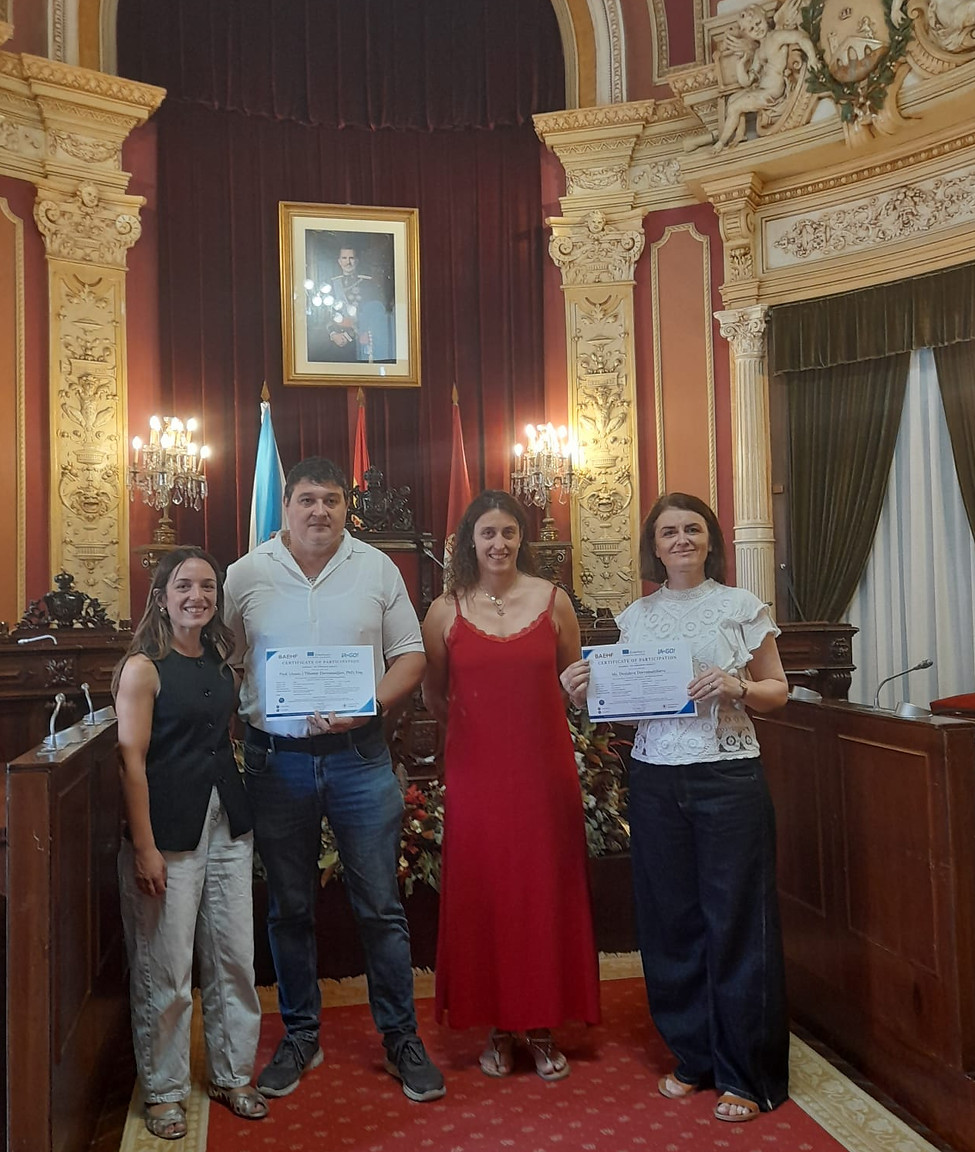
Photo gallery from July 30, 2026, with the official awarded of certificates to participants of the BAEHF (Job Shadowings under the European Erasmus + ErgoAI project), at the city hall of Ourense, Spain by the host Spanish organization IAGO! and representatives of the local municipal council.
Галерия със снимки от 30 юли 2026 г., с официалното връчване на сертификатите на участващите от БАЕЧФ (Наблюдение на работното място - Job Shadowings по европейски проект Еразъм + ErgoAI), в кметството на град Оренсе, Испания от приемащата испанска организация IAGO! и представители на местния общински съвет.
On July 30, 2026, the certificates of the participants of the BAEHF (Job Shadowings under the European Erasmus + ErgoAI project) were officially awarded at the city hall of Ourense, Spain by the host Spanish organization IAGO! and representatives of the local municipal council.
На 30 юли 2026 г., официално се връчиха сертификатите на участващите от БАЕЧФ (Наблюдение на работното място - Job Shadowings по европейски проект Еразъм + ErgoAI), в кметството на град Оренсе, Испания от приемащата испанска организация IAGO! и представители на местния общински съвет.
European Erasmus + Project ErgoAI
Job Shadowings activities
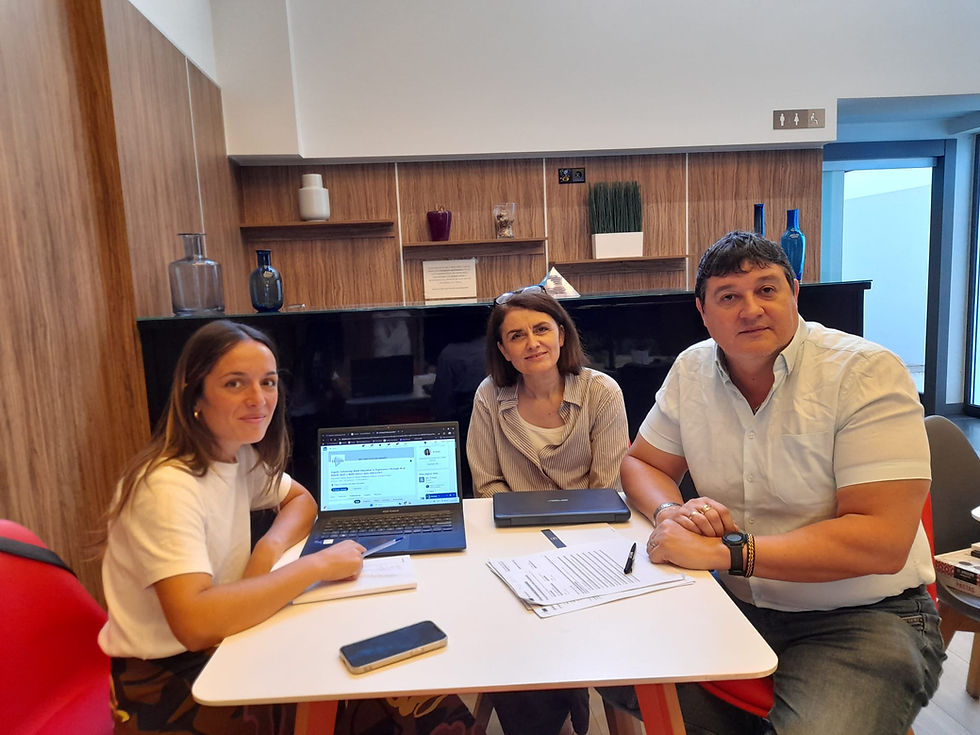
Hotel Alda Estación Ourense Spain,
July 2026
https://www.youtube.com/watch?v=1CNxCG9y-2E
Erasmus+ Job Shadowing Programme
Ourense, Spain — July 2026
Welcome to the official programme guide for the Erasmus+ Job Shadowing visit to in Ourense, Spain. This document outlines all practical arrangements, the weekly schedule, and the professional and cultural learning outcomes for participating educators and project managers from BAEHF. The visit runs from 26 to 31 July 2026 and forms part of the broader IA GO! Erasmus+ project, focusing on Artificial Intelligence in organisational and administrative environments.
Training Venue
Academia Atlas
The Job Shadowing activities will primarily take place at Academia Atlas, located at Rúa Pilar Miró, 1, 32001 Ourense, Spain. The hotel is conveniently situated within 10–15 minutes' walking distance of the training venue, making daily travel straightforward and stress-free for all
participants.
Academia Atlas serves as the operational hub of the IA GO! project in Ourense and provides a professional environment in which participants can observe live AI-supported workflows, attend structured sessions, and engage in meaningful exchanges of practice with local colleagues.
Programme Activities:
- Observation of AI-supported administrative and organisational
workflows.
- Digital transformation and AI implementation in professional environments.
- Meetings and exchange of good practices.
- Practical demonstrations of AI tools applied to project management, communication and organisational processes.
Professional Learning Outcomes:
The professional dimension of this Job Shadowing visit is central to the IA GO! Erasmus+ project. Through structured observation, guided sessions and collaborative exchange, participants will develop a deeper understanding of how Artificial Intelligence is being integrated into the day-to-day operations of adult education organisations. The following outcomes frame the professional learning journey of the visit.
- AI in Organisational Processes: Observe the real-world implementation of Artificial Intelligence in organisational and
administrative processes within Academia Atlas, gaining first-hand
experience of AI-supported workflows.
- Exchange of Good Practices: Share and receive good practices in project management and digital transformation, fostering mutual learning between IA GO! and BAEHF as partner organisations.
- AI Communication Strategies: Analyse AI-supported communication and dissemination strategies in action, exploring how digital tools can enhance outreach, reporting and stakeholder engagement for Erasmus+ projects.
- Transferable Methodologies: Identify methodologies and tools observed during the visit that are transferable to participants' own adult education organisations, creating concrete pathways for institutional development.
- Strengthened Partnership: Deepen the cooperative relationship between IA GO! and BAEHF, laying the groundwork for sustained
collaboration on future Erasmus+ projects and shared European
initiatives.
Cultural Learning Outcomes:
Beyond the professional programme, this visit offers participants a rich set of cultural learning experiences embedded within the daily life and heritage of Ourense. These outcomes recognise that intercultural
understanding, local engagement and informal learning are integral to the Erasmus+ philosophy — and to the personal and professional growth of adult educators working in international contexts.
- Historical & Cultural Heritage: Explore the historical landmarks, architectural heritage and cultural traditions of Ourense, deepening appreciation for Spain's contribution to the broader European cultural mosaic.
- Intercultural Dialogue: Promote meaningful intercultural dialogue
through engagement with local heritage, traditions and communities, fostering the kind of open exchange that underpins European
cooperation.
- Sustainability & Identity: Understand the relationship between cultural
identity, environmental sustainability and lifelong learning, and how these themes intersect in contemporary European urban environments.
- Informal Learning: Experience the value of informal and non-formal
learning opportunities embedded within the local community, reaffirming the importance of context and place in adult education practice.
Дейности свързани с наблюдение на работното място:
- Наблюдение на административни и организационни работни процеси, поддържани от изкуствен интелект.
- Дигитална трансформация и внедряване на изкуствен интелект в професионална среда.
- Срещи и обмен на добри практики.
- Практически демонстрации на инструменти с изкуствен интелект, прилагани в управлението на проекти, комуникацията и организационните процеси.
Резултати от професионалното обучение:
Професионалното измерение на това посещение за стаж е от основно значение за проекта IA GO! Erasmus+. Чрез структурирано наблюдение, ръководени сесии и съвместен обмен, участниците ще развият по-задълбочено разбиране за това как изкуственият интелект се интегрира в ежедневните операции на организациите за образование за възрастни. Следните резултати очертават пътя на професионалното обучение по време на посещението.
- Изкуствен интелект в организационните процеси: Наблюдение на реалното внедряване на изкуствен интелект в организационни и административни процеси в рамките на Academia Atlas, придобиване на опит от първа ръка с работни процеси, поддържани от изкуствен интелект.
- Обмен на добри практики: Споделяне и получаване на добри практики в управлението на проекти и дигиталната трансформация, насърчаване на взаимното обучение между IA GO! и BAEHF като партньорски организации.
- Стратегии за комуникация с изкуствен интелект: Анализ на стратегиите за комуникация и разпространение, поддържани от изкуствен интелект, в действие, проучване как цифровите инструменти могат да подобрят обхвата, отчитането и ангажирането на заинтересованите страни за проекти по Erasmus+.
- Преносими методологии: Идентифициране на методологии и инструменти, наблюдавани по време на посещението, които могат да бъдат прехвърлени към собствените организации за образование за възрастни на участниците, създавайки конкретни пътища за институционално развитие.
- Засилено партньорство: Задълбочаване на отношенията на сътрудничество между IA GO! и BAEHF, полагане на основите за устойчиво сътрудничество по бъдещи проекти по програма „Еразъм+“ и споделени европейски инициативи.
Резултати от културното обучение:
Освен професионалната програма, това посещение предлага на участниците богат набор от преживявания, свързани с културното обучение, вградени в ежедневието и наследството на Оренсе. Тези резултати признават, че междукултурното разбирателство, местното участие и неформалното обучение са неразделна част от философията на Еразъм+ — и от личностното и професионално развитие на преподавателите за възрастни, работещи в международен контекст.
- Историческо и културно наследство: Разглеждане на историческите забележителности, архитектурното наследство и културните традиции на Оренсе, задълбочаване на оценката за приноса на Испания към по-широката европейска културна мозайка.
- Междукултурен диалог: Насърчаване на смислен междукултурен диалог, чрез ангажиране с местното наследство, традиции и общности, насърчаване на отворения обмен, който е в основата на европейското сътрудничество.
- Устойчивост и идентичност: Разбиране на връзката между културната
идентичност, екологичната устойчивост и ученето през целия живот и как тези теми се пресичат в съвременната европейска градска среда.
- Неформално обучение: Изживяване на стойността на възможностите за неформално и неформално обучение, вградени в местната общност, потвърждаване на значението на контекста и мястото в практиката на образованието за възрастни.
g




The International Ergonomics Associationis is a global federation of human factors/ergonomics societies, Geneva, Switzerland
Technology for Co-Working on Health and Active Life: 2nd Conference
https://iea.cc/event/technology-for-co-working-on-health-and-active-life-2nd-conference/
Home \ event
When & where:
place: virtual
date: December 11th 2025 14:00 CET
duration: ~2-3 hours
application/registration: Please apply/register here.
(available: sponsored attendance (free of charge))
contact: events@kohs.at.
Call for papers:
It is planned to produce a conference publication. If you are interested in presenting (short inputs of ~ 7 minutes) and publishing a paper related to the topics of the conference please submit an abstract: here (extended until 15.11.2025).
The conference publication is planned to be published in the journal IETI TES (Transactions on Ergonomics and Safety) and/or IETI TERP (Transactions on Engineering Research and Practice).
Overall subject:
The subject of the workshop is to bring together researchers and practitioners of several disciplines working on concepts to enable the transition of European societies towards healthy and active life.
The health care systems in the European regions are in transition. A wise integration of innovative processes in primary care, competence improvement strategies and the use of technology will be the key for a successful implementation of a demanding change.
Together with partners in research and practice KOHS is being developing a new format of interdisciplinary collaboration. The idea is to foster activities in communities of health care, ergonomics, occupational health and technology research.
Topics of the workshop will be actual demands in health care (secondary users), applications of technology to meet this demands, technology (focusing on open platforms, open source), integrated processes to enable co-working on health of primary users and the health of health care workers (challenges for health care organisations and occupational health (tertiary users).
Topics of the workshop:
-
Actual challenges in health care
-
“New” approach: Community health care → co-working on health → active life
-
-
Technology needs
-
Data – need of data and data structures (open data)
-
Technology competences → new formats of interdisciplinary, interprofessional and intersectoral ergonomics education
-
systematic approach to user experience (UX)
-
-
Approach of: Integrated learning
-
Approach of: Joint cognitive systems (JCS) & Soziotechnical system design (STS-D)
-
Relevant aspects of Ergonomics
Speaker/Input lineup:
-
Aspects of Macro Ergonomics, Andrew Thatcher, University of the Witwatersrand (Wits), Johannesburg, South Africa, President of the International Ergonomics Association (IEA)
-
Ergonomics (Education) in Rural Setting, Elisabeth Quendler, BOKU University, Vienna, Austria
-
IA GO! — Designing Human-AI Learning Ecosystems through Joint Cognitive and Sociotechnical Approaches, Laura Salgado Ferreira, IA.GO!, Greater Huelva Metropolitan Area, Spain
-
FRAM as a Lens for Human-Centered AI and Socio-Technical Co-Working Systems, Niklas Grabbe, TUM (Technical University of Munich), Munich, Germany
-
IEC – a new ergonomic method for risk identification and assessment, Aleksandar Zunjic, University of Belgrade, Faculty of Mechanical Engineering, Serbia, Secretary General of the Federation of European Ergonomics Societies and President of the Ergonomics Society of Serbia
-
From Lab Research to Field Application: Usability Insights of a Soft Arm Exoskeleton, Christina Harbauer, EASE, Germany
-
Links (in Standardisation) between Ergonomics and Occupational Safety and Health, Gyula Szabó, Óbuda University, Bánki Donát Faculty of Mechanical and Safety Engineering, President of the Hungarian Ergonomics Society, Budapest, Hungary
-
The Effects of the Ergonomics and AI Transition on Workers, Firms, and Skills in Digital Era: Insights from International Educational Projects and Real Practical Examples, Tihomir Dovramadjiev, Technical University of Varna, Bulgaria, President of Bulgarian Association of Ergonomics and Human Factors (BAEHF), Darina Dobreva and Mariela Todorova, Technical University of Varna, Bulgaria
-
News from the Standardization of Human-System Interaction, Lutsch Clemens, swohlwahr – Human Centered Strategy, Vienna
-
Assessment and Prediction of a Human Functional State and Performance, Alexander Burov, Institute for Digitalisation of Education, Kyiv, Ukraine
-
Personalization of the Educational Model for Developing Linguistic and Clinical Communicative Competence in International Medical Students through Artificial Intelligence, Albena Dobreva and Presiyan Penchev, Medical University of Varna, Bulgaria
-
Living with Rare Neurodegenerative Diseases: can ICT Facilitate Diagnostics, Therapy and Active Life?, Michał Kosiedowski, Poznań Supercomputing and Networking Center, Poland
-
QKD cryptography in Health, Maria Laura Clemente, CRS4 Research Center, Center for Advanced Studies, Research and Development in Sardinia, Italy
-
Ergonomics, Human factors, Language and Communication, Jens Allwood, University of Gothenburg, Head of SCCIIL – Interdisciplinary center
-
Technology Enabling Socio-Technical System-Design (STS-D), Harald Kviecien, KOHS, Vienna, Austria
Cooperation:
The conference is supported by AAL Europe, FEES (Federation of the European Ergonomics Societies) and organized by KOHS in collaboration with the Bulgarian Association for Ergonomics and Human Factors (BAEHF) and the Hungarian Ergonomics Society (MET).
Further the conference is supported by the Technical Committee for Safety and Health of the International Ergonomics Association (IEA) , the Ergonomics Society of Serbia and the Austrian Ergonomics Society (ÖAE).
MORE DETAIL
Website


THE EFFECTS OF THE ERGONOMICS AND AI TRANSITION ON WORKERS, FIRMS, AND SKILLS IN DIGITAL ERA: INSIGHTS FROM INTERNATIONAL EDUCATIONAL PROJECTS AND REAL PRACTICAL EXAMPLE
March 2026 DOI: 10.6722/TES.202603_10(1).0004
Tihomir Dovramadjiev, Darina Dobrevaa and Mariela Todorova
https://www.ieti.net/tes/2026V10I1/IETI%20TES%20V10%20I1%2032-40.pdf
This article examines the effects of the ergonomics and AI transition on workers, firms, and skills in the digital era, improving insights from international educational projects and real-world applications. The study focuses on optimizing work processes through the integration of advanced technologies, ergonomic principles, and AI-driven solutions to enhance efficiency and strategically deploy human resources. Key areas include the implementation of client self-service mechanisms to reduce routine tasks, digitization of repetitive operations to minimize human error, and acceleration of workflows using modern digital tools. The analysis emphasizes reallocating employee expertise toward high-value activities, leveraging practical experience in digital and AI contexts, and improving workplace safety, healthcare through automation of hazardous tasks. Findings highlight how these strategies foster sustainable organizational development, support skill evolution, and create safer, more adaptive work environments. Real examples from international ERASMUS+ projects such as ErgoAI and SAFE-D illustrate practical approaches for integrating ergonomics and AI into business processes, offering actionable insights for organizations navigating the challenges of Industry 5.0 and the digital-green transition.
https://www.ieti.net/TES/about.html
About IETI International Engineering and Technology Institute (IETI) is the non-profit organization (no membership fees) that promotes the innovations of Science, Engineering and Technology across the world. In addition to traditional science / engineering / technology disciplines, IETI includes Financial Engineering, Financial Econometrics, Financial Statistics, and Mathematics, Statistics, Social Sciences and Business. IETI is also multi-disciplinary development comprehensive public research organization. Our mission is working to science and engineering and technology advances in the world. At present, IETI members include more than 5000 engineers and doctors and professors from science, engineering and technology and related affiliated departments. 100+ professors have been elected as IETI Distinguished Fellows and Fellows, joining well-known experts from all over the world, including Nobel Prize, Turing Award, Fields Medal, Wolf Prize, John Bates Clark Medal Laureates.
https://www.ieti.net/TES/about.html
